


Author Profile
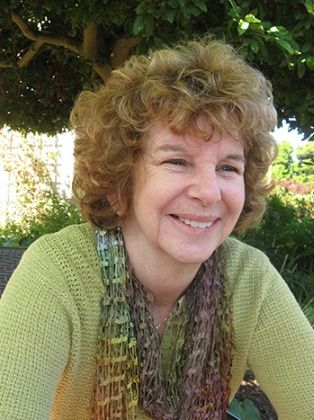
Deborah Hopkinson
15 Books
Deborah Hopkinson is an award-winning author of historical fiction and nonfiction for children and young adults. Her extensive body of work brings history to life through engaging narratives, spanning topics from World War II in 'D-Day' to biographies like 'Carter Reads the Newspaper'. She is widely celebrated for educational and entertaining picture books such as 'Apples to Oregon' and 'Abe Lincoln Crosses a Creek'.
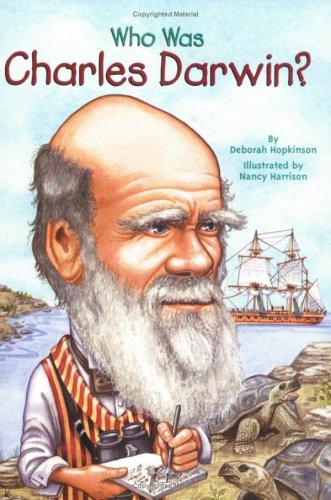


Did you know that Charles Darwin, one of the most famous scientists ever, didn't always love school? When he was a boy, he often got into trouble for doing 'useless' experiments. But what he really loved was nature! He was so fascinated by plants and animals that he embarked on an incredible five-year journey around the world on a ship called The Beagle.
Imagine sailing for years, even if you got terribly seasick! Darwin explored amazing places like the coasts of Africa, South America, and the unique Galapagos Islands. Everywhere he went, he collected new and exciting creatures, from tiny insects to giant tortoises. He carefully studied everything he found, and his observations helped him come up with brilliant new ideas about how life on Earth changes over time.
This book tells the exciting story of Charles Darwin's life and discoveries. You'll learn how his curiosity and adventurous spirit led to ideas that completely changed how people understood the natural world. Get ready to explore his journey and see how one person's passion can make a huge difference!
6-8 Years
Alta Weiss has loved the game of baseball ever since she was a little girl. In the early 1900s, people thought baseball was only a game for boys, but Alta has a pitching arm that could rival anyone on the field.
Determined to play the sport she loves, Alta refuses to let anyone tell her what she can or cannot do. She practices hard, perfects her pitch, and proves that she belongs on the pitcher's mound just as much as anyone else.
This incredible true story follows Alta as she breaks the rules and changes the game forever. It is an inspiring look at an early sports pioneer who showed the world that with enough talent and dedication, anyone can step up to the plate and hit a home run.
6-8 Years
9-12 Years
40 Pages
A Tall, Thin Tale (Introducing His Forgotten Frontier Friend)
Before Abraham Lincoln was the sixteenth president of the United States, he was just a seven year old boy looking for adventure. The year is 1816, and young Abe and his ten year old best friend, Austin Gollaher, are exploring the wild frontier of Kentucky.
When their journey leads them to the edge of Knob Creek, the rushing water looks cold, deep, and more than a little dangerous. Neither boy knows how to swim, but they decide to try and cross the creek anyway. What happens next is a heart pounding moment that changes everything.
This incredible and little known true story reveals how a childhood friendship shaped American history. If Austin had not been there to help his pal out of the treacherous water, the world might never have known the great leader Honest Abe would become.
6-8 Years
9-12 Years
41 Pages
The Story of Six Novels, Three Notebooks, a Writing Box, and One Clever Girl
It is a truth universally acknowledged that Jane Austen is one of our greatest writers. But long before she penned famous novels, she was just an ordinary girl growing up in a house full of bustling siblings and massive bookshelves.
Quiet and observant, young Jane loved to sit back and watch the people around her. She noticed how they talked, what they laughed about, and all their little quirks, locking those details away in her mind for safekeeping. Devouring every book in her father's library, she soon realized that the grand adventures and romances of the time were not the stories she wanted to tell.
Jane decided to forge her own path. Using her sharp wit and brilliant observations, she began filling her writing box with words that would invent an entirely new kind of novel. This beautiful biography reveals how a clever girl found her voice and changed the world of literature forever.
6-8 Years
9-12 Years
40 Pages
It is 1847 in Missouri, and young James is not thrilled about going to school. The classroom feels dark and dreary, and he would much rather be exploring outside. But his dedicated teacher, Reverend John Berry Meachum, believes that education brings its own kind of light, and soon James discovers a true love for learning.
Everything changes when a harsh new law is passed in Missouri, strictly forbidding the education of African American children. The local school is forced to shut its doors, leaving James and his classmates without a place to learn.
Refusing to accept this unfair law, Reverend Meachum comes up with a brilliant and daring plan. He decides to build a brand new school right on a steamboat floating in the middle of the Mississippi River, just outside the boundary of the unjust rules. This powerful true story highlights courage, clever problem solving, and the unstoppable right to an education.
6-8 Years
9-12 Years
40 Pages
A Teacher Appreciation Gift
When you have a lot of energy, sitting still in a classroom can feel nearly impossible. This young girl would much rather be stomping through creeks, running outside, or jumping around than listening and learning at her desk. She even pretends to choke when called upon to read out loud.
But her teacher is not just any teacher. Instead of getting angry, this special teacher pays close attention. She listens carefully, says just the right things, and discovers that the girl's unruly behavior is actually because she is struggling to read.
Written as a heartfelt thank you note from a grown up student looking back on her past, this touching story shows the incredible impact a patient and understanding teacher can make. It is a warm and funny celebration of finding your own way to learn and the educators who gently guide you there.
6-8 Years
9-12 Years
21 Pages
The Whole Story from Soup to Nuts of How Fannie Farmer Invented Recipes with Precise Measurements
Marcia takes her job as her mother's official kitchen helper very seriously. So, when her mother decides to hire a woman named Fannie Farmer to prepare the family's meals, Marcia is left feeling hurt and entirely replaced.
Fannie Farmer, however, is not your average cook. She believes in absolute precision, using exact measurements instead of just tossing ingredients into a bowl and hoping for the best. While Marcia is initially skeptical of these strict new rules, the smell of Fannie's incredible griddle cakes soon becomes impossible to resist.
Before long, Fannie's charm and brilliant techniques win Marcia over. Together, they begin cooking up spectacular delights that Marcia never thought were possible. This fun, historical tale celebrates the real woman who revolutionized American cooking from soup to nuts.
6-8 Years
9-12 Years
40 Pages
Travel back in time to the bustling streets of New York City in 1930. Times are tough, but a magnificent vision is taking shape right before your eyes. Join a young boy and his father as they watch a building rise from the ground, as straight and simple as a pencil, growing taller every single day.
Look up high into the clouds where fearless workers are hoisting massive steel beams and stacking millions of bricks. You will witness the daring sky boys eat their lunches at dizzying heights above the city as they construct the Empire State Building in record time.
When the ribbon is finally cut, you can imagine the rush of zooming to the very top of the world. This award-winning historical tale brings the incredible construction of an American landmark to life with stunning detail and soaring adventure.
6-8 Years
9-12 Years
48 Pages
The Story of Carter G. Woodson, Founder of Black History Month
Carter G. Woodson did not just read about history; he dedicated his entire life to changing how the world remembered it. Born to formerly enslaved parents shortly after the Civil War, Carter understood the immense power of knowledge. Since his father could not read, young Carter proudly read the newspaper to him every single day.
When he started working in the harsh coal mines as a teenager, he met a man who challenged him to do more than just read the news. He asked Carter to research and uncover the hidden stories that truly mattered to their community.
This simple request sparked a lifelong passion. Carter embarked on an incredible journey around the globe, seeking out the untold stories of his ancestors. This powerful biography introduces the remarkable man who founded Black History Month and proved that exploring our past is the first step to building a brighter future.
6-8 Years
36 Pages
Meet a girl from Chicago who dared to dream big. Before she became the first African American First Lady of the United States, Michelle Robinson Obama was a smart, passionate, and hardworking student who wanted to make a difference in her community.
Follow her incredible journey from her childhood on the South Side of Chicago to her historic time in the White House. You will discover how she learned to tackle huge challenges, work hard, and succeed in getting big things done for her country.
Through beautiful artwork and an inspiring story, you will see how Michelle grew up to be an elegant, strong leader, a devoted mother, and a powerful voice for change. This beautifully told biography shows you that with dedication and grace, you can achieve your boldest dreams.
6-8 Years
9-12 Years
32 Pages
When the sun sets and the farm goes completely quiet, a young enslaved girl knows it is finally time to run. Leaving everything behind, she leads her loved ones out into the dense, dark woods. The moon shines brightly overhead as they begin their dangerous journey toward freedom.
Navigating strictly by the stars, the group heads north through the shadows. The path is difficult and terrifying, but they know they cannot turn back. Then, in the distance, the girl spots something hanging outside a house. It is a quilt featuring a striking, deep blue center square.
She knows this specific pattern is a secret signal from friends on the Underground Railroad, meaning the people inside are safe and willing to help. With tremendous courage, she steps forward to lead her family closer to a completely new life.
6-8 Years
9-12 Years
40 Pages
Being the (Slightly) True Narrative of How a Brave Pioneer Father Brought Apples, Peaches, Pears, Plums, Grapes, and Cherries (and Children) Across the Plains
When Papa decides it is time to pack up the wagons and move the entire family from Iowa to Oregon, he makes one thing very clear: he is not leaving his precious fruit trees behind. He loads up apples, peaches, plums, grapes, cherries, and pears right alongside his children.
The pioneer trail is long and absolutely brutal. The family has to navigate across a river that feels wider than Texas, dodge hailstones the size of ripe plums, and somehow survive a scorching drought that threatens to crisp every last leaf.
Thankfully, his brave daughter Delicious is keeping a watchful eye. She is determined to make sure her father's beloved saplings survive the crazy journey so they can eventually taste the sweet Oregon soil. This hilarious, slightly true tall tale captures the wild and wonderful adventure of a real life pioneer family on the move.
6-8 Years
9-12 Years
21 Pages
Sitting in front of a completely blank page can be the hardest part of creating. A young boy has an empty piece of paper, a pencil, and a desire to write, but the words absolutely refuse to flow. He tries scribbling, scrawling, and crumpling up drafts, but his imagination feels completely stuck.
He attempts to distract himself by reading other people's books and eating a snack as slowly as possible, hoping inspiration will magically strike. Just when he is ready to give up entirely, he glances out the window and spots a tiny chickadee gathering seeds.
Watching the little bird work with unstoppable determination, picking up one single seed at a time, the boy realizes a powerful lesson about creativity. He returns to his desk, takes a deep breath, and decides to simply write one word, and then another. This charming story proves that persistence is the real secret to unlocking your imagination.
6-8 Years
9-12 Years
32 Pages
Helen is a fiercely intelligent young girl, but because she cannot see or hear, the world around her feels frustrating and incredibly lonely. Unable to express herself, she often lashes out in anger. Everything begins to shift when a special teacher named Annie Sullivan arrives at her home.
Annie refuses to give up on her wild and stubborn new pupil. With immense patience and absolute devotion, she begins teaching Helen how to communicate using finger spelling. Slowly but surely, the concepts of letters, words, and sentences start to make sense.
As Helen finally grasps the magic of language, a whole new universe opens up. For the first time, she is able to connect deeply with her family and understand her surroundings. This beautifully illustrated story, woven with real excerpts from Annie's historical letters, captures the breathtaking moment when a determined teacher helps a young girl break free from silence.
6-8 Years
9-12 Years
49 Pages
A Tale of One Idea, Twenty Kids, and a Hundred Sea Turtles
Viv is struggling to find her place after moving to a brand new home and a new school near the ocean. Everything feels different and a little lonely, until she discovers something amazing happening right on the beach.
Loggerhead sea turtles are trying to make their way to the ocean, but the bright city lights are steering them in the wrong direction. Realizing these tiny creatures need immediate help, Viv knows she cannot save them all by herself.
She decides to take action and begins rallying her classmates, teachers, and neighbors to join her cause. Together, they form a powerful team dedicated to protecting the baby turtles. This inspiring story shows how one young person with a big heart and a great idea can bring an entire community together to make a real difference in the world.
6-8 Years
9-12 Years
48 Pages