


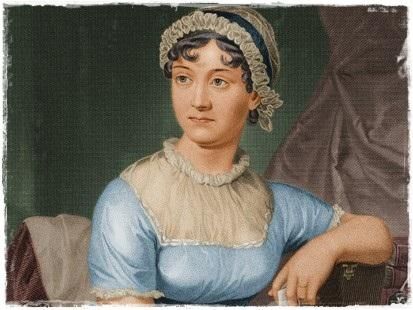
Jane Austen
Sense and Sensibility: The Jane Austen Illustrated Edition
Jane Austen
The Novels and Letters of Jane Austen; Volume 1
Jane Austen
Pride and Prejudice By Jane Austen Annotated Novel
Jane Austen
Persuasion
Jane Austen
Sense and Sensibility by Jane Austen (Fictional and Romantic Novel) the Annotated Edition
Jane Austen
Pride and Prejudice.NOVEL By: Jane Austen (World's Classics)
Jane Austen
Pride and Prejudice: Jane Austen
Jane Austen
Pride and Prejudice By Jane Austen Annotated Novel Of Manners
Jane Austen
Pride and Prejudice By Jane Austen Annotated Version
Jane Austen
Pride and Prejudice By Jane Austen Annotated Version
Jane Austen
Pride and Prejudice: Over 30 Million Copies Sold
Jane Austen
Sense and Sensibility - Jane Austen
Jane Austen
Sense and Sensibility by Jane Austen (Fictional and Romantic Novel) the Complete Unabridged and Classic Annotated Volume
Jane Austen
Pride and Prejudice By Jane Austen Annotated Updated Edition
Jane Austen
SENSE & SENSIBILITY (Illustrated Edition): Enriched edition.
Jane Austen
Pride and Prejudice by Jane Austen-(Annotated)
Jane Austen, oussama el-janaty
Pride and Prejudice: A Novel, By Jane Austen, Complete in Ine Volume
Jane Austen, Stephen Ashley
Emma
Jane Austen, Fiona Stafford, Yōko Hanabusa
Sense and Sensibility: a Novel
Jane Austen, Ros Ballaster, Tony Tanner, Claire Lamont, Henry Hitchings, Hugh Thomson
Mansfield Park
Tony Tanner, Coralie Bickford-Smith, Claire Lamont, Janet Todd, Chris Chundamala, Jane Austen, Kathryn Sutherland
Northanger Abbey
Jane Austen, K. M. Metcalfe, H. Mayer, Elizabeth Bishop, Tim Luscombe, Zoe Cooper, Ismael Ghanizadeh, Moncreiffe Press
This special edition of Sense and Sensibility includes the famous illustrations by Charles Edmond Brock, created in 1898. Brock and his brothers were all successful illustrators of the day and often posed for each other using costumes, props and furniture in their Cambridge studio. Brock's younger brother, Henry, also illustrated Austen's books and joined him in illustrating other Austen releases for this set of 1898 editions.
Sense and Sensibility, first published in 1811, was Austen's first published novel. The story revolves around the Misses Dashwood, Elinor and Marianne, left in reduced circumstances after their father's death. Their new home is a cottage on a distant relative's property, where they experience both romance and heartbreak.
Marianne meets the dashing John Willoughby who courts her with poetry and flowers. Meanwhile, staid, sober neighbor Colonel Brandon also falls in love with Marianne, but she makes her preference for his rival clear. Elinor is in love with the diffident Edward Ferrars, a young man of good breeding and high moral standing. Their sentiments are quite compatible but his ambitious sister Fanny has other plans for him and works to separate these kindred souls.
As true love finds its way to persevering over all obstacles, the impetuous sister gains maturity and balance and the cautious sister has her emotional awakening.
--- Added from Google Books ---
This special edition of Sense and Sensibility includes the famous illustrations by Charles Edmond Brock, created in 1898. Brock and his brothers were all successful illustrators of the day and often posed for each other using costumes, props and furniture in their Cambridge studio. Brock's younger brother, Henry, also illustrated Austen's books and joined him in illustrating other Austen releases for this set of 1898 editions. Sense and Sensibility, first published in 1811, was Austen's first published novel. The story revolves around the Misses Dashwood, Elinor and Marianne, left in reduced circumstances after their father's death. Their new home is a cottage on a distant relative's property, where they experience both romance and heartbreak. Marianne meets the dashing John Willoughby who courts her with poetry and flowers. Meanwhile, staid, sober neighbor Colonel Brandon also falls in love with Marianne, but she makes her preference for his rival clear. Elinor is in love with the diffident Edward Ferrars, a young man of good breeding and high moral standing. Their sentiments are quite compatible but his ambitious sister Fanny has other plans for him and works to separate these kindred souls. As true love finds its way to persevering over all obstacles, the impetuous sister gains maturity and balance and the cautious sister has her emotional awakening.
This book features Jane Austen's classic works, including Pride and Prejudice, Sense and Sensibility, and Emma, alongside her personal letters. Readers will be transported to the Regency era through Austen's vivid descriptions and sharp wit as they explore society's expectations and the complexities of love in Austen's world.
This work has been selected by scholars as being culturally important, and is part of the knowledge base of civilization as we know it.
This work is in the "public domain in the United States of America, and possibly other nations. Within the United States, you may freely copy and distribute this work, as no entity (individual or corporate) has a copyright on the body of the work.
Scholars believe, and we concur, that this work is important enough to be preserved, reproduced, and made generally available to the public. We appreciate your support of the preservation process, and thank you for being an important part of keeping this knowledge alive and relevant.
--- Added from Google Books ---
This book features Jane Austen's classic works, including Pride and Prejudice, Sense and Sensibility, and Emma, alongside her personal letters. Readers will be transported to the Regency era through Austen's vivid descriptions and sharp wit as they explore society's expectations and the complexities of love in Austen's world. This work has been selected by scholars as being culturally important, and is part of the knowledge base of civilization as we know it. This work is in the "public domain in the United States of America, and possibly other nations. Within the United States, you may freely copy and distribute this work, as no entity (individual or corporate) has a copyright on the body of the work. Scholars believe, and we concur, that this work is important enough to be preserved, reproduced, and made generally available to the public. We appreciate your support of the preservation process, and thank you for being an important part of keeping this knowledge alive and relevant.
--- Added from Google Books ---
Pride and Prejudice is a novel of manners by Jane Austen, first published in 1813. The story follows the main character, Elizabeth Bennet, as she deals with issues of manners, upbringing, morality, education, and marriage in the society of the landed gentry of the British Regency. Elizabeth is the second of five daughters of a country gentleman, Mr. Bennet, living in Longbourn. Page 2 of a letter from Jane Austen to her sister Cassandra (11 June 1799) in which she first mentions Pride and Prejudice, using its working title First Impressions. (NLA) Set in England in the early 19th century, Pride and Prejudice tells the story of Mr. and Mrs. Bennet's five unmarried daughters after two gentries have moved into their neighbourhood: the rich and eligible Mr. Bingley, and his status-conscious friend, the even more rich and eligible Mr. Darcy. While Bingley takes an immediate liking to the eldest Bennet daughter, Jane, Darcy is disdainful of local society and repeatedly clashes with the Bennets' lively second daughter, Elizabeth. Pride and Prejudice retains a fascination for modern readers, continuing near the top of lists of "most loved books." It has become one of the most popular novels in English literature, selling over 20 million copies, and receives considerable attention from literary scholars. Likewise, it has paved the way for archetypes that abound in many contemporary literature of our time. Modern interest in the book has resulted in a number of dramatic adaptations and an abundance of novels and stories imitating Austen's memorable characters or themes
--- Added from Google Books ---
Pride and Prejudice is an 1813 romantic novel of manners written by Jane Austen. ... Jane Austen's opening line--"It is a truth universally acknowledged, that a single man in possession of a good fortune, must be in want of a wife"-is a sentence filled with irony and sets the tone for the book.
A Novel, By Jane Austen, Complete in Ine Volume
--- Added from Google Books ---
Pride and prejudice : a novel, By Jane Austencomplete in ine volume Pride and Prejudice is a novel of manners by Jane Austen, first published in 1813. The story follows the main character, Elizabeth Bennet, as she deals with issues of manners, upbringing, morality, education, and marriage in the society of the landed gentry of the British Regency. Elizabeth is the second of five daughters of a country gentleman, Mr. Bennet, living in Longbourn.Page 2 of a letter from Jane Austen to her sister Cassandra (11 June 1799) in which she first mentions Pride and Prejudice, using its working title First Impressions. (NLA)Set in England in the late 18th century, Pride and Prejudice tells the story of Mr. and Mrs. Bennet''s five unmarried daughters after two gentlemen have moved into their neighbourhood: the rich and eligible Mr. Bingley, and his status-conscious friend, the even more rich and eligible Mr. Darcy. While Bingley takes an immediate liking to the eldest Bennet daughter, Jane, Darcy is disdainful of local society and repeatedly clashes with the Bennets'' lively second daughter, Elizabeth.Pride and Prejudice retains a fascination for modern readers, continuing near the top of lists of "most loved books". It has become one of the most popular novels in English literature, selling over 20 million copies, and receives considerable attention from literary scholars. Likewise, it has paved the way for archetypes that abound in many contemporary literature of our time. Modern interest in the book has resulted in a number of dramatic adaptations and an abundance of novels and stories imitating Austen''s memorable characters or themes.The novel centres on Elizabeth Bennet, the second of the five daughters of a landed country gentleman. Elizabeth''s father, Mr. Bennet, is a bookish man and somewhat neglectful of his responsibilities. In contrast Elizabeth''s mother, Mrs. Bennet, a woman who lacks social graces, is primarily concerned with finding suitable husbands for her five daughters, who will inherit little or nothing from their father due to primogeniture laws. Jane Bennet, the eldest daughter, is distinguished by her kindness and beauty; Elizabeth Bennet shares her father''s keen wit and occasionally sarcastic outlook; Mary is studious, devout and musical albeit lacking in taste; Catherine, sometimes called Kitty, the fourth sister, follows where her younger sister leads while Lydia is flirtatious and lacks maturity.The narrative opens with news in the Bennet family that Mr. Bingley, a wealthy, charismatic and sociable young bachelor, is moving into Netherfield Park in the neighbourhood. Mr. Bingley is soon well received while his friend Mr. Darcy makes a less favourable impression by appearing proud and condescending at a ball that they attend (he detests dancing and is not one for light conversation). Mr. Bingley singles out Jane for particular attention, and it soon becomes apparent that they have formed an attachment to each other. While Jane does not alter her conduct for him, she confesses her great happiness only to Lizzie. By contrast, Darcy slights Elizabeth, who overhears and jokes about it despite feeling a budding resentment.Upon paying a visit to Mr.Bingley''s sister, Caroline, Jane is caught in a heavy downpour, catching cold, and is forced to stay at Netherfield for several days. Elizabeth arrives to nurse her sister and is thrown into frequent company with Mr.Darcy, who begins to act less coldly towards her.Mr.Collins,a clergyman and heir to Longbourn, the Bennet estate, pays a visit to the Bennets.Mr.Bennet and Elizabeth are much amused by his obsequious veneration of his employer,the noble Lady Catherine de Bourgh, as well as by his self-important and pedantic nature.It soon becomes apparent that Mr. Collins proposes marriage to Elizabeth,who refuses him, much to her mother''s distress. Mr. Collins recovers and promptly becomes engaged to Elizabeth''s close friend Charlotte Lucas, a homely woman with few prospects.
--- Added from Hardcover ---
Love is in the air when five sisters discover that a wealthy and eligible bachelor is suddenly within reach. But it is his friend, the haughty Mr. Darcy, who becomes smitten. Unfortunately for him, the object of his affection is not so easily swayed. One of the most popular characters in English literature, Elizabeth Bennet is intelligent, witty, well-spoken and ahead of her time. If the terrible rumors about Mr. Darcy are true, he doesn’t stand a chance. Yet not all gossip is to be believed when marriage, money, and reputations are on the line. Will Elizabeth and Mr. Darcy circumvent her haste, his ego, and society’s expectations to find love? Written more than two centuries ago, Jane Austen’s enduring story of manners, family, and love continues to delight new generations of readers.
a Novel
Mansfield Park is Jane Austen’s darkest, and most complex novel. In contrast to the confident and vivacious heroines of Emma and Pride and Prejudice, its central character, Fanny Price, is a shy and vulnerable poor relation who finds the courage to stand up for her principles and desires. Fanny comes to live at Mansfield Park, the home of the wealthy Bertram family, and of Fanny’s aunt, Lady Bertram. Though the family impresses upon Fanny her inferior status, she finds a friend in Edmund, the younger brother.
Mansfield Park explores important issues such as slavery (the source of the Bertrams’ wealth), the oppressive nature of idealized femininity, and women’s education. This edition sheds light on these and other issues through its insightful introduction and wide-ranging appendices of contemporary documents.
--- Added from Google Books ---
Mansfield Park is Jane Austen’s darkest, and most complex novel. In contrast to the confident and vivacious heroines of Emma and Pride and Prejudice, its central character, Fanny Price, is a shy and vulnerable poor relation who finds the courage to stand up for her principles and desires. Fanny comes to live at Mansfield Park, the home of the wealthy Bertram family, and of Fanny’s aunt, Lady Bertram. Though the family impresses upon Fanny her inferior status, she finds a friend in Edmund, the younger brother. Mansfield Park explores important issues such as slavery (the source of the Bertrams’ wealth), the oppressive nature of idealized femininity, and women’s education. This edition sheds light on these and other issues through its insightful introduction and wide-ranging appendices of contemporary documents.
--- Added from Hardcover ---
Fanny Price is born to a poor family, but is sent to her mother's rich relations to be brought up with her cousins. There she is treated as an inferior by all except her cousin Edmund, whose kindness towards her earns him her steadfast love. Fanny is quiet and obedient and does not come into her own until her elder cousins leave the estate following a scandalous play put on in their father's absence. Fanny's loyalty and love is tested by the beautiful Crawford siblings. But their essentially weak natures and morals show them for what they really are, and allow Fanny to gain the one thing she truly desires.
Introduction and Notes by David Blair, University of Kent.
Northanger Abbey tells the story of a young girl, Catherine Morland who leaves her sheltered, rural home to enter the busy, sophisticated world of Bath in the late 1790s. Austen observes with insight and humour the interaction between Catherine and the various characters whom she meets there, and tracks her growing understanding of the world about her.
In this, her first full-length novel, Austen also fixes her sharp, ironic gaze on other kinds of contemporary novel, especially the Gothic school made famous by Ann Radcliffe. Catherine's reading becomes intertwined with her social and romantic adventures, adding to the uncertainties and embarrassments she must undergo before finding happiness.
--- Added from Google Books ---
Story follows the social and romantic trials of the book's heroine, Catherine Morland.
--- Added from Hardcover ---
A wonderfully entertaining coming-of-age story, Northanger Abbey is often referred to as Jane Austen's "Gothic parody." The story's unlikely heroine is Catherine Morland, a remarkably innocent seventeen-year-old woman from a country parsonage. While spending a few weeks in Bath with a family friend, Catherine meets and falls in love with Henry Tilney, who invites her to visit his family estate, Northanger Abbey. Once there, Catherine, a great reader of Gothic thrillers, lets the shadowy atmosphere of the old mansion fill her mind with terrible suspicions. What is the mystery surrounding the death of Henry's mother? Is the family concealing a terrible secret within the elegant rooms of the Abbey? Can she trust Henry, or is he part of an evil conspiracy? Catherine finds dreadful portents in the most prosaic events, until Henry persuades her to see the peril in confusing life with art. Executed with high-spirited gusto, Northanger Abbey is a lighthearted, yet unsentimental commentary on love and marriage.