
The Screen Time That Sends Students Back to Books
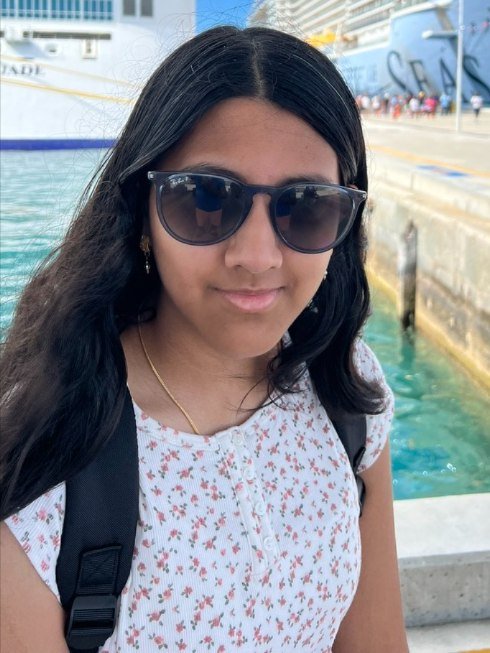
I am 17, so I have never known school without screens. I have used group chats to ask about homework, watched book edits that made a novel suddenly look irresistible, and lost time to feeds that were not trying to make me wiser. Adults are not imagining the problem. Students feel it too.
The sharper question is not whether technology belongs in school. It is what a tool makes a student do next.
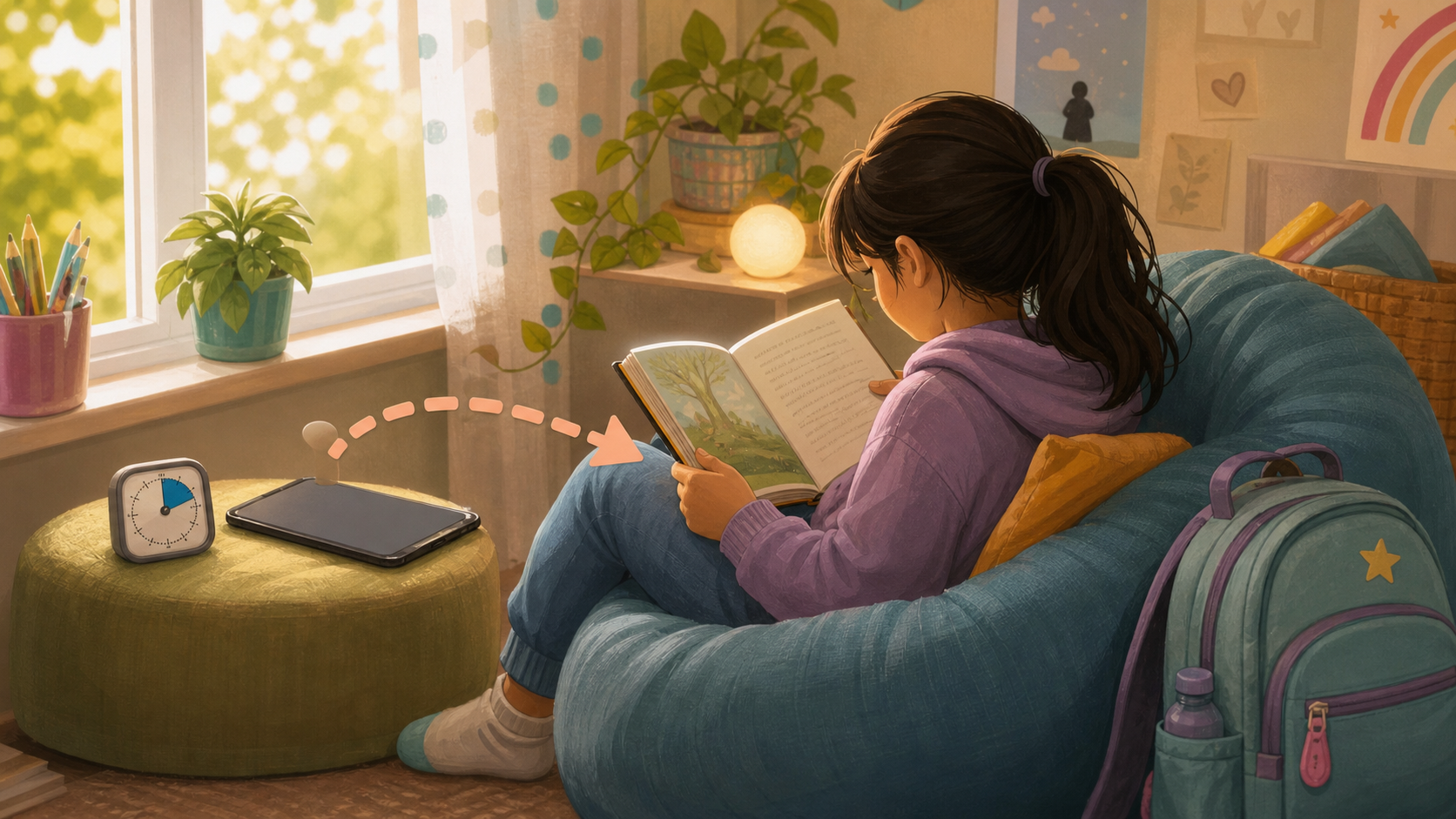
KRKB was built around one standard: a digital moment should send students back to books, writing, discussion, libraries, and better choices. If a screen keeps a reader scrolling, it has failed. If a short screen moment helps a reader choose a book, explain an opinion, create a question, join a challenge, or recommend something to a classmate, then the screen is doing literacy work.
"KRKB is not asking schools to make screens more central. It is asking whether the screen can be used briefly enough, and well enough, to make reading more central."
A stricter standard for school technology
This is the practical test I use for KRKB: the screen moment must be bounded, productive, supervised, and book-facing.
Chart source: KRKB product design criteria. SVG produced with AI-assisted coding and edited for KRKB.
The better question: what happens after the click?
The American Academy of Pediatrics does not ask families to pretend digital media does not exist. Its guidance is practical: build a media plan, protect sleep and physical activity, create screen-free times and places, choose quality content, and watch for media use that crowds out friendships or other interests.1
UNESCO's 2023 Global Education Monitoring Report gives schools a similar caution. Technology can support access, quality, inclusion, planning, and communication, but it can also create harm when adopted without governance, teacher preparation, or a clear educational purpose.2
Those two sources lead to the same classroom test: use technology only when the purpose is clear, the time is bounded, and adults can see what is happening. KRKB's purpose is narrow on purpose. It is not a general social network, an entertainment feed, or a replacement for a teacher, librarian, or parent. It is a reading culture layer: book discovery, student reviews, quizzes, stories, curated shelves, reading challenges, moderation, family visibility, and reports.
That changes the classroom pattern. A teacher can introduce KRKB in a short block, let students begin one focused activity, then move the real work into reading, discussion, revision, and recommendation. A librarian can turn a display into a living shelf. A parent can ask a better question than, "Did you read?"
Where KRKB lines up with literacy research
The chart translates cited What Works Clearinghouse evidence ratings into a simple 1 to 3 scale. It does not claim KRKB has independent causal outcome data yet.
Chart source: KRKB synthesis of cited What Works Clearinghouse guidance. SVG produced with AI-assisted coding and edited for KRKB.
Reason one: motivation is part of the reading problem
Motivation can sound like a soft extra until you are the student deciding whether to pick up a book at all. Skill matters, but choice matters too. For many readers, motivation is the bridge between "I can read this" and "I will actually keep going."
The What Works Clearinghouse adolescent literacy guide includes recommendations to increase motivation and engagement and to provide opportunities for extended discussion of text meaning and interpretation.3 That matters for KRKB because student reviews are not only decoration around the book. They are a way for students to explain meaning to one another.
As a student, I can say this plainly: a book feels different when someone my age explains it well. Adult recommendations matter, but students often need a different kind of signal. A peer can say, "This starts slow, but chapter six changes everything," or "Do not read this if you need a neat ending." That is the kind of detail students actually use.
KRKB makes that peer signal school-safe. Students get the social layer without being sent to commercial platforms built around attention, advertising, or popularity contests. Teachers and librarians still set the context, moderate student work, curate shelves, and guide the next reading move.
The point is the loop, not the login
KRKB is strongest when the login is brief and the loop continues through books, writing, peer discovery, and staff reflection.
Chart source: KRKB product model. SVG produced with AI-assisted coding and edited for KRKB.
Reason two: comprehension improves when thinking becomes visible
The strongest argument for KRKB is not that students enjoy it. Enjoyment helps, but school boards need a more serious claim. KRKB makes reading thinking visible.
The National Reading Panel found that comprehension strategy instruction can improve reading, especially when students summarize, ask and answer questions, monitor understanding, use prior knowledge, visualize, and attend to text structure.4 The What Works Clearinghouse guide for reading interventions in grades 4 to 9 also recommends routine comprehension-building practices, including asking and answering questions, determining the gist, and monitoring comprehension.5
That is the difference between a finished book and an understood book. A student can finish a chapter and still have only a foggy sense of what happened. When that same student writes a review, creates a quiz question, explains a recommendation, or responds to a discussion prompt, the student has to name what mattered.
Reason three: writing about reading is reading work
The Carnegie report Writing to Read, by Steve Graham and Michael Hebert, is useful because it treats writing as a tool for reading improvement. The report identifies research-supported practices where writing about texts can help students read better.6 KRKB reviews and stories should be seen in that family of work. They are not just "posting." They are writing about reading for a real audience.
I would not claim that every KRKB review automatically produces deep comprehension. A vague review is still vague. A lazy quiz is still lazy. The point is that KRKB gives teachers, librarians, and students a visible artifact to improve. A log can hide weak thinking. A review exposes it gently enough to revise.
The research inference, stated carefully
Purposeful media use is the correct standard.
AAP and UNESCO guidance do not require pretending screens do not exist. They require balance, purpose, governance, and adult judgment.
Student motivation deserves serious design.
WWC guidance treats motivation, engagement, and extended text discussion as part of adolescent literacy work, not as decoration.
Visible thinking gives educators something to improve.
Reviews, quizzes, stories, and discussion prompts make comprehension easier to see than minutes-read logs alone.
Writing can strengthen reading.
The writing-to-read evidence supports student writing about texts when the task requires claims, evidence, summary, analysis, and response.
What I would not claim
I would not walk into a school board meeting and say, "KRKB proves test scores will rise." That would be sloppy. KRKB is still building its own outcome evidence. The stronger claim is narrower and more honest: KRKB is designed around literacy behaviors that already have support in reading research.
It encourages student choice without making choice chaotic. It uses peer influence without sending children into random feeds. It asks students to write and question instead of only consume. It gives teachers and librarians artifacts they can review. It gives families a cleaner window into reading life. It gives administrators something better than a pile of reading logs when they ask what happened.
That is the academic case. KRKB is not trying to make screens more central. It is trying to make reading more social, more visible, and more likely to continue after the screen closes.
The founder test
Here is the test I keep coming back to as the person building it: if KRKB ever becomes a reason for a student to stay on a device instead of picking up a book, it has failed its own design.
The healthiest version of KRKB is quiet. A student logs in, finds a shelf, writes a review, checks a challenge, sees another reader's recommendation, and then leaves with a book in mind. A teacher sees who is participating. A librarian sees what is catching on. A parent has one better conversation at home.
That is not a flashy promise. It is a practical one. I think practical promises are the ones schools should trust.
Research notes
- American Academy of Pediatrics. AAP family media guidance emphasizes media plans, balance, screen-free times and places, quality content, and watching for media use that interferes with sleep, physical activity, friendships, or other interests. Kids and Tech: Tips for Parents in the Digital Age.
- UNESCO Global Education Monitoring Report 2023. The report argues that technology in education should be judged by clear educational purpose, evidence, equity, governance, and teacher readiness. Technology in Education.
- What Works Clearinghouse, adolescent literacy. The guide includes recommendations to increase motivation and engagement in literacy learning and to provide extended discussion of text meaning and interpretation. Improving Adolescent Literacy.
- National Reading Panel. The report identifies comprehension strategy instruction as helpful, including summarizing, question asking, question answering, comprehension monitoring, using prior knowledge, visualization, and text structure. Teaching Children to Read.
- What Works Clearinghouse, grades 4 to 9 reading interventions. The guide recommends routine comprehension-building practices, including asking and answering questions, determining gist, and monitoring comprehension. Providing Reading Interventions for Students in Grades 4-9.
- Graham and Hebert, Writing to Read. The report reviews evidence that writing about texts can improve reading comprehension when students summarize, analyze, and respond to what they read. Carnegie Corporation of New York.