
Why Writing Reviews Made Me Read More Carefully


When I was 13, I could finish a fantasy novel in a weekend and still feel the story slipping away by Tuesday. I remembered the mood, a character or two, and maybe the big twist. I did not always know what the book had done to me or why.
Writing reviews changed that. A review made me pause after the last page and put my reaction into order. I had to decide what I actually believed about the book, then explain it well enough for another reader to use.
"A review is the moment a reader stops saying "I liked it" and starts explaining what the book actually did."
Thinking about thinking
A good review is a small exercise in metacognition. That word sounds bigger than the habit itself. It means noticing your own thinking while you read and after you finish.
That matters because a review is not the same as a star rating. A star rating can be a mood. A review has to make a claim. If I say a plot twist worked, I need to explain what the author prepared earlier. If I say a character felt flat, I need to point to the missing choice, voice, or consequence.
Research on writing and reading gives schools a careful reason to take this seriously. Graham and Hebert's Writing to Read report found that writing about texts can support reading comprehension when students summarize, analyze, and respond to what they read.1 A KRKB review is useful for exactly that reason. It asks students to turn a private reaction into visible thinking.
From finishing a book to explaining it
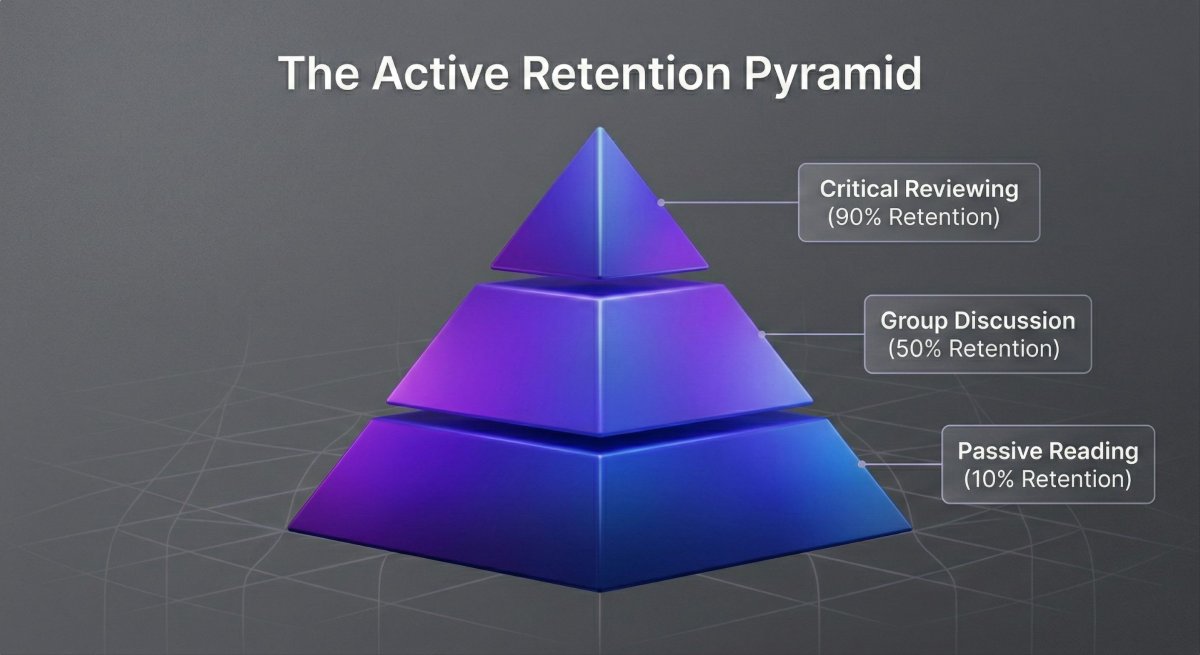
The goal is not to decorate reading with a post. The goal is to move students from memory and taste into evidence, audience, and clearer judgment.
Visual source: Gemini Nano Banana generated chart, edited for KRKB. Research basis: Graham and Hebert; What Works Clearinghouse.
The skills are ordinary, which is why they matter
Review writing does not need to sound fancy to be valuable. It trains three school habits that show up everywhere: naming what happened, choosing evidence, and thinking about an audience.
The What Works Clearinghouse adolescent literacy guide recommends extended discussion of text meaning and interpretation.2 A review can become a quiet version of that discussion. One student explains a book, another student uses the explanation to decide what to read, and a teacher or librarian can see the quality of the thinking.
Three habits a review builds
Name what the book did
A useful review moves beyond "good" or "boring." It names pacing, voice, character pressure, setting, theme, or the moment where the book changed.
Use evidence without sounding stiff
Students learn to support a claim with scenes, choices, and patterns from the book. That is literary reasoning in a form another student will actually read.
Write for a real reader
The audience is not only the teacher. A review helps the next student decide whether the book fits their taste, patience, and mood.
A note to students
Please do not treat reviews as extra homework. Treat them as a record of how your taste and thinking are changing. A careful review says: I read this, I noticed this, and I can explain it to someone else.
That is a better digital footprint than a random feed. It is also a better reading habit than closing the book and letting the whole thing blur.
Notes
- Graham and Hebert, Writing to Read. The report reviews evidence that writing about texts can improve reading comprehension when students summarize, analyze, and respond to what they read. Carnegie Corporation of New York.
- What Works Clearinghouse, Improving Adolescent Literacy. The practice guide includes recommendations for extended text discussion and motivation in literacy learning. Institute of Education Sciences.